
Monthly Archives

3 Articles

News

Prevention of Fatigue in Drivers: How to maintain concentration when operating a car.

Posted by admin on

Besides feeling uncomfortable during the journey, fatigued drivers cannot be trusted. As much as you are driving to work or to enjoy yourself, the longer you will be behind the wheel, the less attentive you will be. Driver fatigue management is necessary in this case to ensure alertness, safety, and responsible driving.

The simplest of all recommendations? Do not forget to have frequent breaks. Before your eyes begin to age. Rest, stretch and have a breath of fresh air. Incredibly, a 10-minute break would make you feel refreshed. You could not get far without having a drink during a marathon run. Long distance driving is not an exception. Have frequent breaks to prevent working on empty stomachs.

Sleep is another aspect that is not given much consideration. Even though it might be tempting to work hard to meet a deadline, losing a couple of hours of sleep to be on the safe side never pays off. Sleep deprivation impairs memory, judgment and reaction speeds. You may be able to make do in the short-term, until you run out of juice, just as you do when you attempt to use a low battery.

Have the consideration of your environment. Ensure that you drive in a comfortable place. Adjust the seat, the ventilation and the mirrors before you start the engine. Simply changing the posture will help greatly in reducing fatigue. You can imagine it as reorganizing your table, in case you are not comfortable you will lose concentration and your energy will drain more quickly.

Keep your mind active. It is so easy to fall asleep because of driving hours, particularly during the long and straight roads. You may either play music, listen to a podcast, or talk a little. Do not over-excite yourself with much noise. Just like in balancing on a tightrope, balance can only be made through the right degree of concentration.

It can make you more attentive in the case you drive long distances or have longer shifts. Fatigue can be brought about by dehydration and sluggishness as well. You must not drink coffee, but have a bottle of water by your side. Whereas it may provide you with a short term boost of energy the crash might be more serious than the initial slowness.

When you are getting drowsy and the traffic is slowing down then switch drivers. In case that is not possible, find a safe parking place and have a power nap. Even 1520 minutes of sleep can be a tremendous difference. Same thing with charging your phone; all one has to do is recharge it just enough so that you are back on track.

Technology may also make a major contribution. Driving aids such as lane departure warning and adaptive cruise control are very nice to have to keep you awake. They can make the long drives a little less stressful, and they can give you a little breathing space, but they cannot replace sleep.

Finally, know your limits. You should never risk to lose your health or even the life of a person in the name of a job or deadline. Learn to put your feet up even when you are on the brink of your goal. You and the road will be there to-morrow.

As far as preventing driver fatigue is concerned, it is more important to be proactive and make minor changes that will accumulate over time as opposed to being flawless. The most important pillars to remain alert are rest, water, breaks, and good driving environment. With the right attitude, you will be able to drive longer, safety and more witfully.
News

Background Of Truck Tracking System: Paper To Accuracy

Posted by admin on

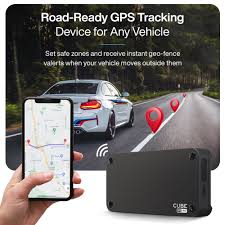
Formerly, the fleet managers would have to make do with paper logs, telephone conversations and intuition. The distance travelled was written in on the napkins by the drivers. The dispatchers assumed the position of people relying on the nature of the sounds along the road and vibrations. It worked, but just barely. Then best truck gps app came by and paper trail became electronic in a day.

The original systems were wonderful but tedious. When a blinking dot is being moved on a map, we had a science fiction film. The fleet managers would know with immediate effect the actual position of the trucks and not the position of the drivers themselves. Another difference was that change in itself. Accountability came into picture and there was no more hiding place to inefficiency.

After that came telematics. The system, without any prior notice, was also not only tracking the movement, but also listening. Each of them started talking, including engine statistics, speed, idle time and fuel consumption. Those were the numbers that thoughts had. They explained what drivers could do with their trucks like drag racers and what drivers could get out of a tank.

Next, it was software’s turn. The reports started being spontaneous. Alerts started to ring when something seemed to be unnatural. Maintenance has become a science and sticky notes are no longer necessary in scheduling maintenance. The dispatchers started talking like an air traffic controller in a calm, clear, and commanding voice.

We are now in the age of AI. The system does not just make predictions, it also records. It knows that the car model 42 overheats when ascending long hilly landscapes. Even it detects fuel waste before your accountant. It will give you clues when still the problems are not on your radar. It is magic but it is just math.

And it’s extremely funny. What began as a way of tracking down of trucks evolved to become a business compass altogether. It shows how time flies, where money is hidden and where performance is played to the best.

Paper records were hearted alright but they were punctured. The modern tracing tools were made so as it was an approximation into exact science. They were not only transformed, but became better. It used to require clipboard and some fortunes to do it; it only requires data, sight and few smart clicks. After having experienced such a clearness you can never return to carbon-copy allotment.

News

Staying Organized: How an Electronic Work Diary App Could Help Keep Your Sanity

Posted by admin on

Let’s face it: managing hours worked, breaks taken, and shift notes can be frustrating for even the most disciplined people. There is always the possibility of losing track of one detail and everything becoming very difficult to manage. This problem can be easily solved with the use of an electronic work diary app. You will be able to work without the hassle of paper logs, spreadsheets, and post-it notes. Many drivers, contractors, and freelancers use an electronic work diary application to manage their daily admin because it increases their accuracy and compliance and lowers frustration with time management.

Have you ever tried to remember the last time you worked without logging your hours and breaks? You probably don’t remember the last job before your current site that you worked on. Paper logs and memory can fail but digital entries can track your time to the minute. An electronic work diary application can remind you to take breaks, warn you when you need to stop working, and even sync the data across devices and track the rest periods for fatigue management in high-risk industries.

Consider a scenario in which you telecommute for a manager who requests a report you dial in and send in a time sheet which you would normally be required to send in every time you correspond with a supervisor at in a role which record to report a time sheet report for a 10 hour shift computer tasking In that case it You’re main task would feel basic and time consuming. And I can know this for a fact. And can be frustrating if you have to. But in that case frustration would not arise if your manager wouldn’t have called. Most would have be bored for that time but in this case you would feel a sense of satisfaction. Technology isn’t frustrating. It frees your time for focus on more critical tasks at hand.

Not every system achieves perfection. Occasional poor signal connection, an application malfunctioning, or a user forgetting an entry are still relevant possible problems. However, relative to the problems of having to sort through dirty logbooks or re-keying notes by hand at the very late hours of the night, it is a small price to pay. The key is to find a system or application interface that is easy to use. In this situation, less complexity is an advantage.

Concern for privacy is understandable. Keeping user data in a centralized system or in the cloud is justified, but excessive caution can create distrust. However, reputable systems keep data encrypted and confidential, and even give users the option of data sharing. In this scenario, the user is less likely to give their calendar to a suspicious entity.

One strange thing is that, once you adapt to the convenience of an electronic calendar, you are likely to find using a paper calendar, or even a notebook, outdated. You can even find yourself tapping your notebook or expecting it to sync or update. Unfortunately, it does not.

Overall, use of an electronic work diary application reduces chaos, anxiety and the risk of failing a compliance audits. It is remarkably simple, and even feels human. Good technology should function in a quiet, unobtrusive manner. One is likely to redefine human interactions with technology. It is clever, and even feels human.